
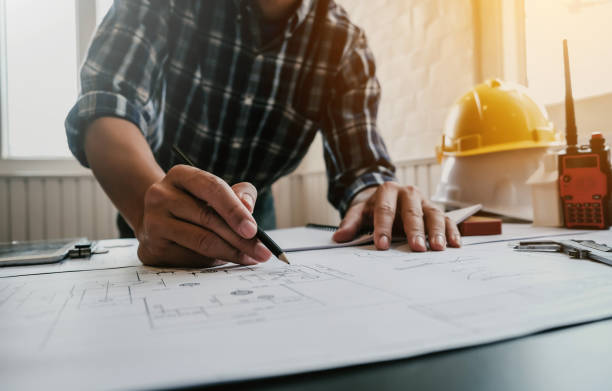
Sustainability in Construction: During the Construction Phase
Buildings and construction sectors together account for around a third of the world’s final energy consumption as well as nearly 40 percent of indirect and direct CO2 emissions. Also, the structure of our buildings, as well as our built environment, have a huge impact on whether our planet is sustainable or preserved for the next generation.
Although we often think of construction as a business that is polluting and consumes tons of fuel and emits tons of greenhouse gases, however, it’s actually set to have one of the most significant impacts on the future of our climate. The impact of the construction industry could have a lot in common with efficiency. To make your plans more efficient and to excavate, examine machines, and figure out the ways to improve their efficiency as well as to delve into our processes that have been running for a long time and uncover things that aren’t required to be completed. There’s a lot of it, and plenty of it is in the construction industry.
Two things intersect two things electrical and mechanical. We need to pull something out and rebuild it. We may have ordered the wrong components and now are experiencing a delay in the schedule and the like with the ability to model these items in software and then make use of these services in order to achieve an accurate first-time solution and reduce the amount of waste that occurs throughout the process.
The process of creating everything prior to arriving at the site and as many as possible without wasting any resources is crucial. The tools are in place. The technology is there. We have to put it into the hands of more companies. And they’ll be more productive and environmentally sustainable.
Create projects that are more efficiency and more effective methods to reduce the amount of carbon dioxide in an environmentally sustainable manner. The reality is that the greatest impact can be realized during the planning stage during the design phase. Therefore, when a project is being designed, you should consider optimizing routes or corridors between one city and another city or from one place to another.
At the simplest level, that is being an accountable operator on site and performing their work with expertise but being aware of while they’re operating the machine, and of the way they organize their day and how they make efforts to reduce their fuel consumption. Burning, as well as their impact on the environment. Waste and contaminated materials construction experts are making the decisions on what material is worthy of going to a landfill and which materials are not.
The prevention of stormwater pollution is an integral element of making sure we’re green. It’s not often thought about in terms of sustainability. Construction creates so much garbage that it’s likely to be discharged into streams. A significant component of this starts with the stormwater plan and making sure we have the appropriate steps in place to ensure we’re not causing an adverse impact on the environment.
All of these factors contribute to an enormous climate picture. Every construction worker must be aware of this.
Takeaway 1. Digital workflows are crucial. The majority of business owners have already implemented digital transformation. The most significant advantages of digital workflows are improved efficiency of processes and better-informed decision-making, as well as improved cost predictability and the ability to reduce risks.
One of the more important conclusions is that owner-run organizations that do not utilize digital workflows have less understanding of how their processes can contribute to delays and errors. This suggests that digital workflows are a key element in the continuous improvement of operations in the near future.
- However, For the 15 percent of business owners who aren’t working with digital workflows, the increased project volumes resulting from the growth in infrastructure could put them at risk.
- The reason to look further: The data suggests that small-sized owner businesses may have advantages over larger companies in terms of digital transformation. Check out the report to learn the reason.
2. Takeaway: The most successful owners are now expanding their digital workflows to partners outside of the company, such as engineers and contractors. 78% of the owners do not use digital workflows, while 62% of those who often use digital workflows are planning to invest in digitization over the coming three years. Most sought-after investment areas include things like reviewing design, procurement/bidding, and project management.
- However, Far more owners experienced an increase instead of a decrease in the number of tools they’ve deployed. This causes more problems in the digitalization of workflows for all stakeholders. Owners must embrace connected construction technologies to gain the value of external workflows. Let’s take a look at the thoughts of Matt Sprague, Sr. Product Manager at Trimble, to discuss collaboration and share the model’s importance in the construction of connected structures.
- The reason to go into the deeper layers: Thirteen areas have been identified by owners’ organizations as investment-ready within three years. Check out the report to learn more about what they mean.
3. Takeaway: Some of the most significant impact of connectivity is experienced by both the owner and general contractor. This is also the most difficult to establish. Of the 59 percent of owners who have frequent problems, 51% cite the construction manager or GC as the stakeholder to whom they are most frequently experiencing issues with connectivity. The most commonly reported breakdowns are between architects and owners, as well as permitting authorities.
- However, General contracting and construction management companies have the opportunity to beat their competition by closing the gap using digital workflows that are connected and digitized.
- Why you should dig into the depths: Owners also ranked six ways to increase satisfaction with their connections with another stakeholder. To find out which came out as the best, check out the report.
Takeaway 4: Of all the areas that could be transformed digitally, the preconstruction process will benefit the homeowners the greatest. In order to identify the most important activities owners feel cause delays and mistakes in their projects, preconstruction closing out, construction, and other activities were evaluated in terms of frequency and impact. These ratios showed how design review estimation bidding/procurement, as well as project intake/request, are the four most likely processes to have the highest chance of delaying projects.
This is consistent with takeaway number 2 above, which shows that the two most important areas where companies plan to automatize over the next three years are the design review process and bidding/procurement.
- However, Since preconstruction activities involve numerous players and much guesswork, it’s unexpected that this stage of construction is able to be the deciding factor in the project. This is why it’s crucial to select connected solutions that ensure data integrity and create value for all stakeholders in the supply chain, as Dan Conery, Sr. Director, Product Strategy and Management, Trimble, explains here.