
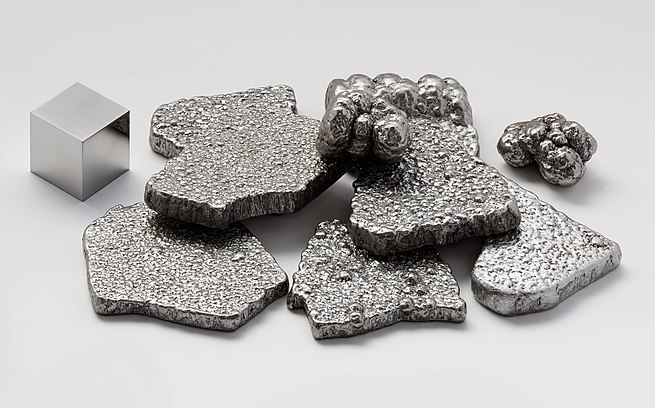
Iron and steel are two different things. Iron is an element, while steel, in its simplest form, is an alloy made of iron and carbon. Many people believe that “wrought iron”, in some way, refers to steel since “wrought” can also be referred to as forged. These terms date back to ironwork before the industrial scale. According to modern standards, the initial refining and casting of iron ore was a simple process that resulted in a cast material full of imperfections and inclusions. The thermomechanical process of forging cast iron to make “wrought iron” was used to refine and improve iron. This made it more useful as a structural material.
Iron Production: A History
The production of iron shifted from artisanal craft to industrial processes. New names were given to the end products of the melting process. “Smelting” is the heating of iron-bearing ore to extract and melt the element. After being molten and separated, liquid iron was then poured into ingots (also called “sows”), which gave rise to the original form of iron, known as “crude iron”. For further processing, sows were cut into smaller pieces. “Sows” were broken down into smaller pieces for further processing. This is where “pig iron” comes from.
The “pig iron” would be refined by a blacksmith who would heat the ingots at the forge, smashing the voids and dispersing any impurities. Although the impurities may not be eliminated, the forging procedure reduced large contaminant clusters into smaller sizes, less likely to weaken the structure.
Steel Creation
The alloy we know as steel was made by adding very little carbon to the molten ferrous iron. The mechanical properties of steel are enhanced by the dispersed carbon atoms, which disrupt and distort iron’s crystal lattice. The subsequent thermomechanical process like forging is an important step in ensuring that the cast structure of the original ingot is transformed. It ensures consistent mechanical properties by dispersing any clusters of impurities and alloying elements and crushing any voids that could weaken the final product. The recrystallization of an alloy is also a result of hot forging, which produces a microstructure called “fine grain”. This increases steel toughness and fatigue characteristics.
Steel vs. Iron Properties
Steel is more durable than iron (yield, ultimate tensile strength) and harder than many other types of iron (often measured by fracture toughness). The most popular steel has an addition of less than.5% by weight. While steel will be stronger, a higher percentage of carbon will make it brittle. Manganese, silicon and phosphorus are also common elements in steel. Nickel, chromium and molybdenum may be added to alloy steels. Stainless Steel is low-carbon steel with chromium. Every element added to the steel alloy, even in small quantities, adds desirable properties. An alloy containing mainly iron can be one of the most useful and useful materials ever created if the recipe is correct.