
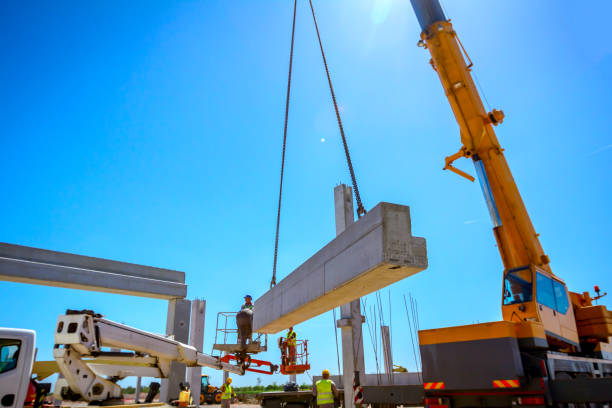
Colossal County Hospital was coming apart in the middle. With the arrival of hundreds of newly hired nurses, doctors, as well as technicians, million of equipment in use and patient appointments that were delayed for months in the new hospital, it was not usable. First of all, the construction was not completed and a lot of the work that was completed was not working. The contractor had put mortgages on the property in case of non-payment, which prevented occupancy. The cost of the project was far greater than the financing available. Hospital staff were frantic and the bank was in a frenzy and the Board of Trustees was awry.
What caused it? Chairman of the board — head for the branch in his local area of a finance company – was puzzled. He tried to find out the development of the company.
Two years prior, board members had decided to build a crucial new facility as well as renovate an adjacent older facility. They hired the top hospital architect. A group of trustees decided into focusing its attention to a bond issue that could finance the hospital at a low cost, while another group formulated and implemented a thorough marketing plan that positioned it as a global leading institution in a variety of areas of research and healthcare. Together with the doctors that would oversee the different programmes, the architect created the most modern medical facility available and an impressive building that would be a symbol of the hospital as well as an iconic prominent landmark in the community.
Based on the architect’s advice the local contractor was hired to start pricing the initial plans. As the budgeting and drawing developed, the hospital was convinced enough to request bank financing. The bank, based on the results of the estimates provided by the contractor as well as the bond proposal approved the loan.
The contractor then presented the final cost estimate. The board was shocked to discover that the estimate was increased by $3.5 million. The detailed construction plans were not yet fully completed. The contractor claimed that the architect was enhancing the scope and quality of the construction. The architect claimed that he was just following the increasing list of demands from board members, trustees and marketing experts commissioned for the purpose by the Board. However, the bond issue was based on the initial budget, and was not enough in size to handle the increased cost. The hospital was unable to proceed. The trustees and doctors had a meeting.
The doctors claimed they only added a few dollars and refused to remove any of the medical facilities built inside the structure. The trustees believed that the total increase was less than the price they had quoted. Everyone believed that the contractor was making money off the hospital. The chairman decided that it was time to take action.
“In my industry–financial services,” he explained, “all services are bid for. Every applicant is given the chance to state what they’ll be charging. This is the best way to find the best cost.”
A local manufacturing company on the board was in agreement. “I was able to have one of these “trust me’ contractors work in the warehouse for me on a material-and-time basis. He soaked me well. He employed his worst employees on the task, he did not fight for discounts on purchases and he did all that he could to bring expenses up so that his fees was going to increase. Don’t make the same mistake that I did.”
Thus, the project was open for bids without any changes to the scope, but without plans and specifications. Five companies offered bids. The chief financial officer of the hospital gave an award to a contractor who’s price was within the budget originally set. The builder who originally was chosen was exiled in shame, despite his claims of his estimation being the correct cost for the amount of tasks the hospital will require.
Conflicts developed at once. The new builder believed that the space that was to be renovated would be empty to allow for construction however, the hospital could not accomplish that. The contractor threatened to halt work, but the board gave in and offered him a boost. The contractor and the architect battled over the interpretation of the specifications and drawings. Trustees distracted by the issues of marketing and finance were not always quick to make decisions. The contractor shaved every edge to lower costs, but the architect would overrule him repeatedly and again.
When the building was getting close to completion the board was shocked to receive an enormous change-order form from the contractor, claiming incorrect specifications, altered conditions, and delay in the decision of the owner. The hospital was unable to pay. The contractor shut the building down and erected mechanic’s lien on the property.
That was where the construction stood at present. The board members–successful local businesspeople, educators as well as public servants — were irritated and embarrassed. The architect was a bit bitter. The original contractor was full I-told-you-so’s to anyone who would pay attention. The chairman was still astonished.* *
The story may be exaggerated obviously, but certain aspects of it are common to those who have been working on a construction venture. Problems with construction are a part of daily business. Companies move. Companies modernize their old buildings. Companies that are growing require more space. Businesses have some of the largest and longest-term obligations to fund these investment in addition to construction disputes and delays can be as among the most difficult issues that a business can encounter. It is often impossible to predict exactly what a project will cost and how long it will take to complete, and it is always difficult to coordinate a dozen professionals–architects, engineers, contractors, bankers, lawyers, consultants, many with their own hidden agendas–and scores of subcontractors, suppliers, and workers.
Overall the risks associated with the construction industry are the same as those project that a business has to face but they are quite different from those that businesses are accustomed to. But many corporate executives and directors who continuously review and manage each other controllable risk fail to utilize all of the tools available to reduce the risk of construction.
One reason directors and CEOs ignore or undervalue the risk of construction and give it to subordinates for them to manage, is that construction is a dated technology. There was a time when buildings were built, so what’s special about this one? The CFO is the one who watches for other expenditures, so why should she not be able to monitor these funds as well? There is a division within the company which is responsible for purchasing, so why can’t they buy the building? The facilities manager has an understanding of the contractor’s language. Why not let him supervise the entire process? It’s foolish to not give a task which has already been used many times since the pyramids were completed.
It is, however, the unique CFO who is able to go past the initial few figures to comprehend the services the prospective contractor actually offering. It is the rare buying agent that can supervise the completion of a project that has many thousands of parts that are delivered over several years Facilities managers aren’t always equipped with the knowledge in defending their employer from contractors who make claims. In addition, the majority of companies don’t undergo the process of building frequently. Building skills aren’t an essential part of the manager’s job description.
Construction can be a complex procedure governed by complicated contracts, and with complicated relationships across multiple levels. The client is actually purchasing the service, not the product. In one relational level the contractor provides an essential function by overseeing and overseeing the tasks of hundreds or dozens of suppliers, subcontractors, artisans, and workers. At the next stage there is a person–usually the architect or contractor–must be able to coordinate the services of the builder alongside those of architects or engineers and consultants. Then, somebody must manage the whole process and coordinate the coordinators. At this point the CEO and board of directors can be able to oversee projects and their risks, or let the risks take care of them. The only way to ensure accountability at the highest level.
The following seven actions are included involved in the management and analysis of risk in construction:
1. Understanding the different types and stages of risk.
2. Examining the risks associated with an individual construction project.
3. In-house capabilities and risk management and creating the foundation for a construction team.
4. Definiting a building plan.
5. Selecting the best type of contract.
6. Selecting the builder.
7. Monitoring construction.
Understanding the Types and Phases of Risk
There are three types of risks in construction, and they appear in two different phases. The first type of risk is financial. The project goes over its budget and threatens the financial stability of the business. Budget overruns aren’t always due to inadequate supervision of construction. They often result of poor planning, a desire for pricing or a lack of coordination.
The second risk is that of the construction time – the building is completed behind the schedule. The delay can have catastrophic economic consequences. What harm can your shop suffer if the space is prepared on January 4 and not November 15? What will your company’s operations be like when the computer room isn’t fully prepared since nobody was ever given the responsibility of providing uninterrupted power? What will happen to your company if your CFO must spend four days in case of construction arbitration?
The third kind of risk is one that has to do with design. It’s when the construction isn’t able to satisfy the needs of the company. For instance an health-care organization with a fixed budget may decide to construct a modest expansion with above-average finishing work and technology, only to realize after completion that it does not contain enough room. (Perhaps it could have constructed an even bigger, but more plain facility for the same price.) An office designer may opt for an air-conditioning system that has the individual control of every office but is found to be noisy. (A better choice would be to eliminate each control to improve an acoustic effect or maybe to invest more money for both.)
All three kinds of risks can be addressed in both the preconstruction phase and the construction-and-settlement phase. The preconstruction phase is usually the most strenuous for the owner, and usually the most crucial. The company must now prepare projections on marketing, budget and space and then make choices about zoning, design requirements and financing, traffic and other environmental considerations. The risks of this phase are low in one way because nobody is making anything. However, the risks are significant in different ways. Consultants are costly, and as the construction loan isn’t currently in existence, the business is required to pay them using unrestricted, highly speculative cash. Additionally, a mistake made in planning or an act of budgetary whimsy in the present time could lead to huge problems in the future.
At this point, Colossal County Hospital was already in trouble for three reasons. The first was that the trustees were focused on their specialties within finance and marketing, delegating the rest of the preconstruction duties to doctors and subordinates. The architect was the second to dominate the preconstruction team, leading it to a concept that was more historical and architectural sense more sense than money. The third reason was that the contractor didn’t anticipate the ever-growing list of wishes and when he did see the list and was unable to persuade the board that his proposed price was in fact reasonable, and in it was inexplicably high. It was clear that the preconstruction group had been not chosen to meet the actual demands of the project and nobody had the ability to supervise the group in depth and with authority.
There’s a lot of ambiguity and uncertainty in the preliminary construction phase as the cost-design equation is constantly changing. Many hands-on experts struggle in this absence of understanding A poorly run team can become chaotic when the team members are permitted to cloak themselves behind their discipline and obstruct one another.
The cost-of-design picture which emerges from this phase is the base that the risk for the entire construction period will be based, but the work being completed now is the easiest to manage of all. Financial and market risks are uncontrollable and external to the company. The risk of preconstruction is within the group and is managed. The most important factor in achieving success in this stage and elsewhere is selecting the right team and providing coordination and a central point of reference. The health care and air conditioning noise examples can be better addressed in the phase prior to construction. Making the most of the expertise of both contractors and architects at this point can prevent many problems in the future.
In the construction-and-settlement phase, the risk factors move from planning to supervision. The plan is usually fixed. Time risk is no longer dependent on establishing a realistic timeframe but rather, sticking to it. Budgetary danger is not a question of pricing, but more about cost control.
However, appearances can be deceiving. Based on the contract controlling costs is largely or exclusively the responsibility of the contractor. If your contract specifies liquidated damages in the event of delayed delivery. Then the the schedule is also the responsibility of the contractor however most contracts permit certain schedule and cost exemptions. Additionally the construction loan is in effect now, and the bank will reimburse to the contractors direct for construction costs, typically in a monthly schedule and always after ensuring that the work has been completed and the supplies are actually delivered, and almost always after retaining up in the cost as a assurance of performance until the project is finished and final settlement occurs. What is the homeowner’s risk?
Let’s revisit Colossal County Hospital, a huge institution that was brought to its knees in this stage of the construction project. First, inadequate planning in the initial phase of construction came back to roost when the project came to an end. The trustees decided to put the project on bid on insufficient documents for construction (blueprints and specification) and the contractor had the right to alter the cost as the architect added more information. The bond issue imposed a limit on the amount of funds available, architects and doctors were able to increase the amount however the trustees had not faced the issue of the difference. Third, the circumstances for construction (the hospital’s continual utilization of the space that is which is being renovated) and trustees’ inability to take prompt decisions have caused the contractor to lose time and delay, which is valid reasons for scheduling an extension. Additionally, the mechanic’s lien allows a subcontractor or subcontractor in an outstanding payment dispute to lock up a project before courts and block its sale or use for a period of time until the matter is resolved. These are just one of the many issues that may arise after the schedule, price and financing mechanisms, as well as payment methods and the delivery date were supposedly established in a single and final.
As intricate and as significant as the risks are, particularly in the infamous case of Colossal County Hospital, it is an unnecessary effort to attempt to eliminate each one of them because it is impossible to do. The objective is to limit and manage the risk of construction within a reasonable limit.
Assessing the Risks of a Particular Construction Project
No two projects, not two locations, and certainly not two construction teams can ever be identical. To select the most appropriate project team, appropriate team of consultants, the appropriate architect, the best contracting firm, and also the best type of contract, you have be aware of the risks associated with the particular project. The primary consideration is project the level of complexity.
What are the needs of the company to meet the requirements of this project? Are there any urgent needs to get occupancy? Do you have enough time to complete the drawings and specifications before you offer the project for bid? Or do you need to extend the preparation of this document prior to the beginning of construction? Do the mechanical components standard or does the contractor be required to plan their design and layout and installation? Do you consider the quality of construction crucial such as for hospitals or do you require just walls and a roof? What about financing for projects? Some lenders won’t take a loan until they’ve seen the contracts as well as all the drawings completed.
What’s the issue with the location? There’s a huge distinction between constructing on a parcel of land that is well-drained and on a downtown location with undetermined history and unclear conditions. The hazardous waste and the remnants of foundations that were once in use are two of the unnoticed unexpected issues that are the responsibility of the property owner in many contracts.
What is the structure? A brand new structure will contain many more elements than an older one However, a project for rehabilitation could bring more uncertainties and higher dangers.
The process of assessing risks is a first step in managing it. Its chart “Assessing Construction Risk,” highlights the main elements of risk and illustrates how three different projects could have evaluated them.
Assessing Construction Risk
Aligning the Risks to Capabilities building a team for construction
After you’ve assessed the risk of your venture Next step is to evaluate the capabilities of your company. The construction team is formed through making a number of traditional make-or-buy choices: What do we require? Do we have it available in-house? Do we need to purchase it from outside? A chart titled “Assessing In-House Capability,” can to give you an idea of the capacity of your company to manage the dozens of construction-related issues that could arise during the project.
Assessing In-House Capability
Everybody knows that constructing an apartment requires a builder and typically an architect, two engineers as well as a lender, numerous consultants, and occasionally even a lawyer. (Of all the professionals, there’s only one that you have the choice to select at your own discretion: the architect. Look in the box that says “Choosing an Architect,” for ideas.) In order to manage risk, the primary stakeholders include members of your company’s board of directors and CEO and the senior staff, at least one of them are responsible for the overall project.
Choosing an Architect
Even if you’ve never been involved in the construction of a building You can still assist your business find an appropriate architect.
These individuals–who may be called the representative of the owner (or perhaps even or even the developer)–will become at heart of a highly charged web of high egos, a lot of anxiety, and huge stakes in the financial realm. While the architect gives eloquent presentations about aesthetics and design and the contractor might speak predominantly in profane language. When the banker is able to talk of financial double-talk with the intention of reducing the risk for the lender by a small amount, directors of operations and marketing rip their hair over the thought of entering the wrong place at the right moment. It takes a skilled leader to manage the entire team’s efforts. If the CEO has the resources and knowledge, all the better. If not, they will have to delegate the task to an unusual subordinate with the required expertise and knowledge or assign a portion of it to an contractor or architect. In no way is coordination to be delegated in a casual manner. Construction is among the most contentious sectors on the planet and is also the source of Murphy’s Law–“If there is a chance that something goes wrong, it will.”
Defining a Building Strategy
They have two significant implications. They first show how to recognize and deal with the many individual aspects of risk. They also outline an approach for the selection of consultants and contractors. The presence of high-risk elements suggests that you consider the performance advantages of cooperating and look for an expert who can work as an integral part of a team. Most low-risk components point towards the cost advantages of competitors. Both types of contractors are accessible almost all over the world.
Construction is scattered and relatively uninformed. The strategies of companies are typically more intuitive than well-planned. But, either through chance or choice construction companies are situated in the middle between cheap service providers on one side of the spectrum, and service providers that are highly differentiated on the other. Clients face a challenge to determine the purpose of each project and choose the best match.
Colossal County Hospital had a risky job. It ought to have put together a strong and cooperative team, which included an engineer who would work closely with the board in order to address issues. However, the board that was geared to competition too much made decisions solely on the basis of cost and suffered the negative consequences of a conflicting relationship with the building contractor. In contrast the trustee who thought that he had been “soaked” on a time-and-materials contract for the construction of a warehouse actually did make a mistake by wasting money in cooperation. He should have submitted an attractive hard-money bid that was that was based on the complete documents for construction.
If the project is a basic one-story structure on flat empty land, a cheap service is likely to be the best. The builder isn’t likely to provide much more than bringing the building material onto the location and building the structure. If you’re on the other side the task you’re working on is a complex rehabilitation that is fast-paced and renovation, the non craft services provided by a distinguished contractor could be of great value. The project could place specific demands on the contractor for example, constructing one phase as the next one is being developed and priced in anticipation of the discovery of hidden issues, such as hidden decaying timbers, or completing a quality task based on insufficient design documents, or working around existing tenants. Contractors who can handle all of this will cost more, but they’ll behave more like colleagues on your team.
Another benefit that a differentiated contractor may offer is the ability to profit from the fragmentation of building business by gaining a competitive advantage with subcontractors. The commercial construction industry is comprised of hundreds of subcontractors across several hundred trades. Smaller businesses tend to be entrepreneur-like and extremely self-sufficient, but their unpredictability can be a challenge or a benefit. Purchase orders and subcontracts can make up 70 percent or 80% of the total costs of a commercial building project. Builders who are adept at dealing with competition on the trade level could charge higher fees for their services but yet still have the lowest cost.
Certain contractors are also adept in forming value-adding alliances with the subcontractors they rely on the most. Teams like this can benefit from efficiency from sharing manufacturing and design data as well as an understanding of one the other’s working styles. In this type of collaborative situation, the game may have a total that is greater than zero. Teamwork can reduce the risk of friction uncertainty, inefficiency, and the duplication of efforts.
This kind of teamwork is exactly what Colossal County Hospital needed at all levels. Naturally, developing a team requires commitment and confidence. The main question for managers is whether the benefits are worth the extra cost. Colossal County didn’t expend the time or money to construct the best team it could have. Other owners might not have to.
Picking the Right Kind of Contract
The different kinds of services described in this article have resulted in three major contracts. They’ve been in use for a long time, yet most owners aren’t aware of their relationship to risk control. Most of the time an accurate assessment of the type and amount of risk will clearly point to one of these contracts.
This lump sum contract is simple to comprehend. Each contractor that bids on the project calculates the total cost, and adding a profit margin and offers a fixed price for the project. The owner chooses the lowest price. If the costs increase then the cost to the owner stays the same. If costs fall, and the motivation to lower them through cutting corners may be substantial–the additional margin is passed on towards the contractors. This contract is really an all-or-nothing game. The contractor will get something you can’t get.
A lump-sum contract is one in which the contractor assumes all risks that are visible, while the owner does not take any risk. It seems like a great option for projects with high risk however, the exact opposite is the case. If costs increase significantly above the cost that was offered and agreed to, the contractor’s commitment to the project could abruptly disappear. In the second instance, with a lump-sum contract, the price could be fixed however, so too is the scope of the project. Any minor change in the project could make the whole contract go off the table and you are unable to change the terms of your contract once the work has started. By avoiding risk, also lose a lot of the power to make decisions. This means that you have to pay for your services and take a chance, which is not the best way to create hospitals or any other structure that is highly differentiated. But, the lump sum contract is the best option for jobs that are simple and where cost will be more crucial than collaborative.
Many people are aware of time-and-materials contracts, which are based on the cost of work, plus a cost. Lawyers are paid the same way, as auto mechanics. The builder is reimbursed for the actual cost of the job, regardless of what they are, in addition to the cost of a percentage or markup. Also, in essence the builder is responsible for all the risk and gives the contractor has no. The client can be reasonably confident that the work will be done correctly since it is not a reason for slapping corners. The more money the contractor is paid on the job, the more money the contractor earns, and we have learned from our experiences that auto mechanics and lawyers are not motivated to rush.
Despite the obvious drawbacks in regards to risk There are three frequent situations — and a rare one where time-and-materials remains an appropriate contract to the owner. The first one is when quality is more important than price. The second occurs when the time available is short and contractors is required to work a lot of overtime. The third scenario is when the construction documents aren’t complete or not present, leaving the contractor with no basis to base their bid. The fourth scenario occurs when the owners have such experience in construction and time to spend on supervision that they are able to get exactly what they want, and keep costs down by directing the place and the quality of every nail and brick.
In the majority of cases either of these contracts will be adequate. But for many large construction users, a hybrid form called guaranteed-maximum-price is more appropriate. It’s usually the most appropriate contract to perform the work classified as high-risk in both charts.
Like time-and-materials, guaranteed-maximum-price is also based on the cost of work plus a fee, but risk is shared. In the case of a maximum price, the contractor is able to pass all expenses to the owner. However, after that price has been achieved, all risk passes to the contractor.
In a contract for time and materials owners benefit in the event that direct costs are less than what they are expecting. If costs increase excessively, contractors take on the excess, similar to the case of a lump-sum agreement. This arrangement generally preserves the top characteristics of the different contract types, and permits owners to enjoy their cake and enjoy it too. Most of the time, the guaranteed maximum cost will be over the lump-sum cost for the same project due to the profit margin of the contractor is not capped.
The aim in this instance is to create contractors as teammates without giving them a free hand. The profit of the construction company does not depend on cutting costs but on the performance of the service owner. What the client gets is a limit on the risk of exposure and a co-operative relationship rather than an antagonistic one.
The exhibit, “Cost vs. Price with the Three Contract Types,” shows price in relation to actual construction cost in lump-sum, time-and-materials, and guaranteed-maximum-price contracts.